Jon Strum
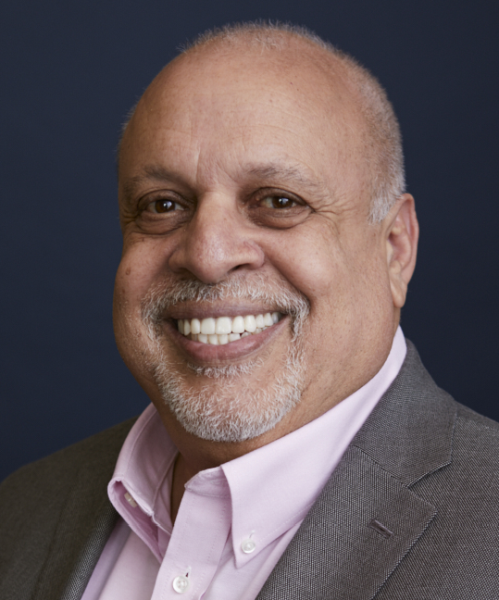
Host
In 1997, my wife Jeanne was diagnosed with secondary progressive MS. At the time of her diagnosis, Jeanne was an avid cyclist, waking at 4AM to ride her bike 40 miles every morning. Jeanne's very first symptom was a tiny tremor that soon spread, affecting her arms, hands, and head. It knocked her off her bike and made even the simplest activities of daily living -- brushing her hair, getting dressed, and feeding herself -- impossible. Jeanne's symptoms continued to progress, and within just a few short years, she had become quadriplegic, no longer having the use of her arms or legs.
Jeanne’s MS continued to progress rapidly, compromising her vision and robbing her of her ability to swallow and even speak. Jeanne’s disease also took a toll on her cognitive abilities, leaving her with no short-term memory. When I visited Jeanne at her sub-acute nursing facility or, later, a long-term acute care hospital, on a Monday, she would have forgotten my visit by Tuesday. For over a decade, Jeanne was bed-bound, receiving all her nutrition by means of a feeding tube and even requiring assistance just to breathe.
Watching Jeanne, I saw more courage and quiet strength than I could ever hope to find. But progressive MS takes no prisoners. On February 19, 2020, Jeanne passed away.
That journey shaped everything I do today. In 2015, I was chosen from hundreds of global applicants to serve as one of three lay members on the International Progressive MS Alliance Scientific Steering Committee. The Alliance is a global collaboration between MS organizations, researchers, healthcare professionals, the pharmaceutical industry, and people affected by progressive MS focused on accelerating the development of life-changing treatments. In its relatively short lifespan, the International Progressive MS Alliance has invested millions of dollars in pursuit of its goal, becoming a true difference-maker.
A year later, I stepped into the National MS Society’s activist network. I’ve walked the halls of Capitol Hill in Washington, D.C., to press lawmakers on critical healthcare issues, worked with state legislators in Sacramento, testified before legislative committees to champion protections for California's family caregivers, and served for six years as Chair of the Society’s California Government Relations Advisory Committee.
I throw myself into this work—pushing for funded science, advocating for policy changes, and raising awareness about the realities of living with MS by speaking at conferences across the globe—in the hope that other families can be spared what Jeanne and I lived through.
Along the way, I saw firsthand the brilliant science quietly advancing inside laboratories around the world. But I also saw that it remained trapped behind dense academic jargon that people affected by MS couldn’t easily access or digest.
So, in 2017, I launched RealTalk MS: a place where we could break down cutting-edge research, clinical trials, and policy in plain, easy-to-understand English. Thanks to this incredible community, RealTalk MS has grown into the world's most-listened-to podcast for people affected by multiple sclerosis, reaching listeners in over 100 countries.
From day one, my goal for RealTalk MS has never changed: to keep our conversation going until there’s no longer a need to talk about multiple sclerosis, except in the past tense.